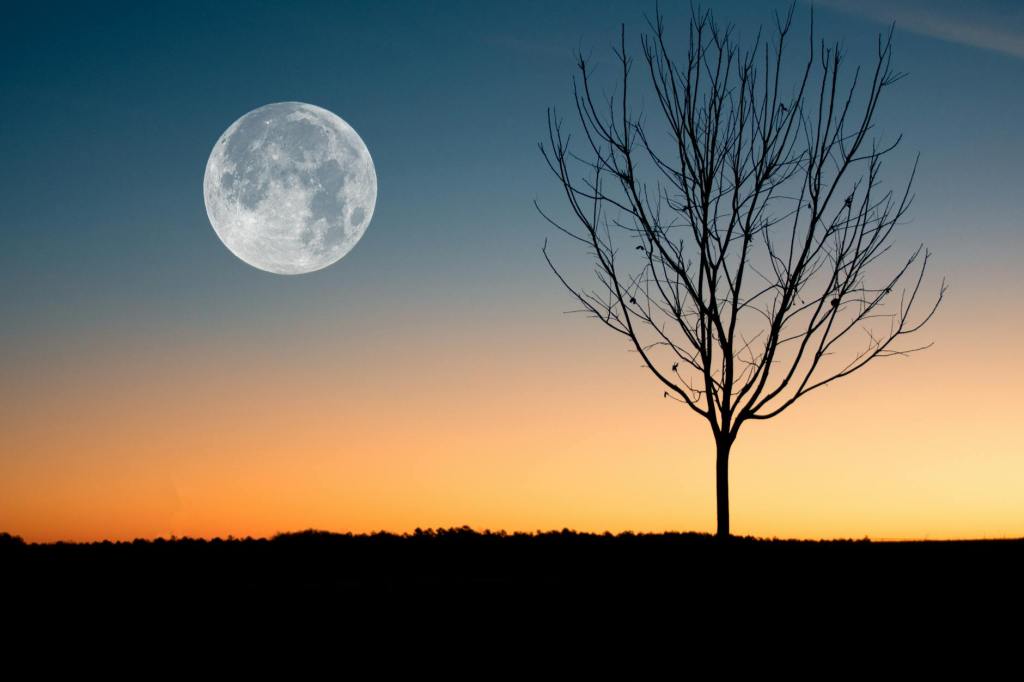
It’s the middle of the night. The world is quiet. Then—nothing. No explosion, no shockwave. The Moon is just… gone. No fragments. No trace. One second it’s there, the next it’s a hole in the sky.
At first, people might not even notice. But within hours, the Earth would begin to unravel. The Moon isn’t just a pretty light in the sky—it’s a silent architect of our planet’s balance. Without it, Earth would become a stranger almost overnight.
Tides Collapse
The Moon’s most obvious role is its pull on Earth’s oceans. Its gravity creates the bulging tides that rise and fall each day, driving currents and shaping coastlines. If the Moon vanished, ocean tides would drop by nearly 75%. Only the Sun would remain to tug on the seas—creating weak, shallow tides.
Marine life that relies on tidal rhythms—like crabs, mussels, coral spawners, and many shoreline species—would go into chaos. Nesting grounds would dry. Currents would slow. Entire ecosystems could collapse in just a few years.
Fisheries would suffer. Coastal economies would take a direct hit.
Earth Starts to Wobble
Right now, the Moon acts as a gravitational anchor, stabilizing Earth’s axial tilt at about 23.5 degrees. This tilt is what gives us consistent seasons. Without the Moon, Earth would wobble like a spinning top, its tilt slowly swinging between 0 and 85 degrees over tens of thousands of years.
That means seasons would become unpredictable. At certain tilts, some regions might face scorching summers followed by frigid, nearly sunless winters. Ice ages and super-heated tropical periods could flip every few millennia. Civilizations would struggle to adapt to a world where the climate keeps shifting under their feet.
Nights Go Dark—and Cold
With no Moon, the night sky dims. The Moon reflects sunlight and provides nighttime brightness almost 400,000 times stronger than the stars alone. Without it, nights become much darker, especially during what would’ve been full moons. This could alter animal behavior globally—especially for nocturnal species that rely on moonlight to hunt, migrate, or mate.
And there’s more: moonlight plays a subtle role in regulating Earth’s temperature. The loss of reflected heat and light would cause slightly colder nights, which could alter local climates in unpredictable ways.
Time Slows (Literally)
The Moon has been gradually slowing Earth’s rotation for billions of years. When the Earth first formed, days lasted only 6 hours. The Moon’s pull stretches Earth slightly, creating friction that slows the spin.
Without the Moon, that friction vanishes. Earth’s rotation would stabilize faster, possibly freezing day length at 24 hours—but the longer-term effect would be instability. The planet might speed up or slow unpredictably due to solar tides or internal shifts, throwing off circadian rhythms and weather patterns.
The Sky Would Feel Empty
Humans evolved under the glow of the Moon. It shaped culture, mythology, timekeeping, and even human biology. Studies suggest our sleep patterns and moods are affected by moonlight. Its sudden disappearance would trigger psychological and cultural shock.
The stars would still shine. But the sky would feel hollow—an ancient presence gone.
Conclusion: More Than a Satellite
The Moon isn’t just a rock orbiting Earth. It’s a regulator, a stabilizer, a cosmic partner. Without it, Earth would still spin. Life might go on. But the planet would be more chaotic, less predictable, and far more hostile.
So the next time you see the Moon rise—quiet, silver, and steady—remember: that calm in the sky is what keeps chaos from swallowing the Earth.
 The Zuara Press
Leave a comment