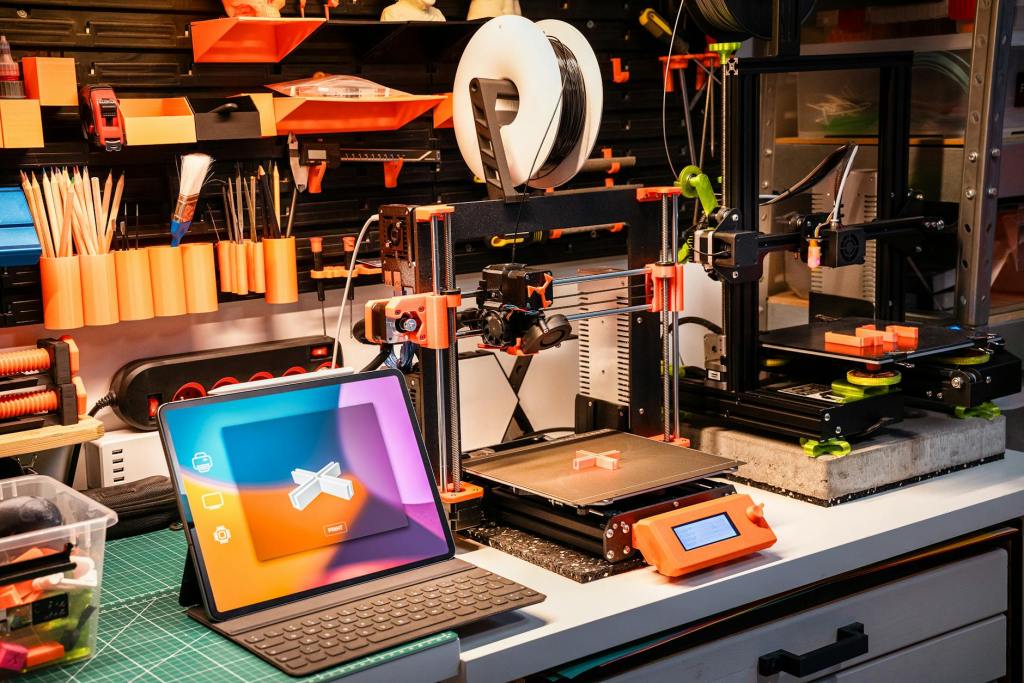
3D printing, also known as additive manufacturing, is changing how we design, prototype, and produce objects—from medical implants to aerospace parts. Instead of removing material from a block like traditional machining, 3D printing builds objects layer by layer using materials such as plastic, resin, metal, or even living cells.
This process enables rapid prototyping, where engineers can go from a digital model to a physical object in hours. It reduces waste, speeds up development, and allows for the creation of geometries that are impossible to make with traditional manufacturing. Hollow structures, internal channels, and complex surfaces can be printed with precision.
Industries like automotive and aerospace use 3D printing to make lightweight parts with high strength-to-weight ratios. Medical fields are printing custom prosthetics, dental implants, and even scaffolds for tissue engineering. In construction, large-scale printers are laying down concrete for houses.
Customization is one of its biggest advantages. Products can be tailored to the user—whether it’s a shoe designed for someone’s foot shape or a surgical implant modeled from a patient’s CT scan. The technology also democratizes manufacturing, giving small teams the tools to build without needing a full factory.
However, challenges remain. Print speed, cost of materials, and quality control are areas still under development. But as the technology advances, it’s expected to move from niche use to mainstream production. What started as a tool for designers is now reshaping entire industries—and soon, perhaps, the way we build everything.
 The Zuara Press
Leave a comment