Category: Biology & Life sciences

  • Weird Biology: Creatures That Shouldn’t Exist—But Do

    Weird Biology: Creatures That Shouldn’t Exist—But Do

    In a world ruled by rules—gravity, evolution, survival of the fittest—some organisms break them and survive anyway. They’re outliers. Biological rebels. Creatures that by all logic shouldn’t exist… yet they do.

    Nature is full of weirdos, but some lifeforms are so strange they seem like sci-fi leftovers. Immortal, limb-regrowing, radiation-immune, even vacuum-surviving—these species force scientists to rethink what life is actually capable of.

    Here are some of the world’s strangest organisms—and the science that makes them not just real, but impossible to ignore.


    The Immortal Jellyfish (Turritopsis dohrnii)

    Immortality sounds like myth. But there’s a jellyfish that can do it.

    Native to oceans worldwide, Turritopsis dohrnii doesn’t die of old age. Instead, when it’s injured, starving, or aging, it triggers a process called transdifferentiation—turning its adult cells back into juvenile ones. In simple terms, it reverts its age. Again and again. Potentially forever.

    This loop isn’t true immortality—it can still be killed by predators or disease—but biologically, it has no programmed end. Researchers are studying its cellular mechanisms to understand regeneration and aging in humans.


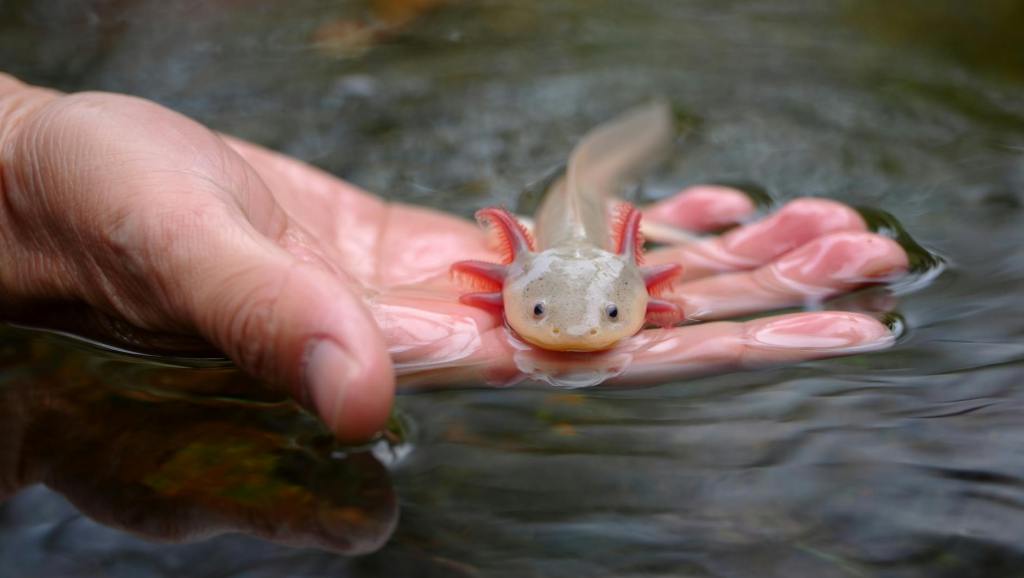
    The Axolotl (Ambystoma mexicanum)

    Known for its permanent smile and frilly head gills, the axolotl is a Mexican amphibian that never really grows up—it stays in its juvenile, aquatic form its whole life, a condition called neoteny.

    But what makes the axolotl truly bizarre is its regeneration. It can fully regrow entire limbs, parts of its brain, spinal cord, heart tissue, and even parts of its eyes—without scar tissue.

    Most animals can’t do this. Even other salamanders have limits. Scientists are using axolotls to study how cells regrow without mutating into cancer, hoping to one day apply that knowledge to human healing.


    The Tardigrade (Water Bear)

    Tardigrades are microscopic, eight-legged creatures that live in water films on moss and soil. They’re nearly indestructible.

    They’ve survived:

    • Extreme heat and cold (from near absolute zero to above boiling)
    • High radiation
    • Intense pressure
    • Complete dehydration for decades
    • Exposure to space and vacuum conditions

    How? Tardigrades enter a state called cryptobiosis, where they dry up, stop metabolic activity, and become almost lifeless—like a paused game. In this state, they’re protected by proteins and sugar molecules that shield their DNA from damage.

    They’re proof that life can survive beyond Earth-like conditions—and possibly on other planets.


    The Platypus (Ornithorhynchus anatinus)

    It lays eggs. It has fur. It produces milk. It has a duck bill. It’s venomous. It’s a mammal. None of that should go together.

    When British scientists first examined a platypus in the 1800s, they thought it was a fake—a stitched-together prank. But it wasn’t. The platypus is one of only five surviving species of monotremes, mammals that lay eggs.

    Males also have venomous spurs on their hind legs, delivering a painful chemical cocktail. And their bill? It’s not just for looks. It’s loaded with electroreceptors that detect tiny signals from prey in muddy water.

    The platypus breaks every rule in the mammal playbook—and reminds us that evolution doesn’t care about fitting in.


    The Glass Frog (Hyalinobatrachium fleischmanni)

    Native to Central and South America, the glass frog has see-through skin on its underside. You can literally see its beating heart, organs, and digestive system.

    While the transparency might seem like camouflage, scientists believe it’s also useful for thermal regulation and reducing shadows that predators might notice.

    Recent studies found that glass frogs have the ability to hide their red blood cells in their liver while they sleep, reducing visibility through their skin and avoiding detection by predators. That’s an unheard-of biological strategy in vertebrates.


    The Green-Blooded Lizard (Prasinohaema)

    Found in New Guinea, this bright green lizard isn’t colored by skin pigment—it has green blood.

    Its blood contains extremely high levels of biliverdin, a toxic byproduct of red blood cell breakdown. In most animals, even small amounts of biliverdin cause jaundice and liver damage. But for this lizard, it’s totally normal.

    Scientists are baffled by how it avoids poisoning itself. Some believe the high biliverdin concentration may help protect against parasites or infections, acting as a kind of internal defense.

    It’s a biological contradiction—and a mystery still being unraveled.


    The Naked Mole-Rat (Heterocephalus glaber)

    It’s blind, wrinkled, nearly hairless, and lives underground. But don’t underestimate it.

    Naked mole-rats resist cancer, feel almost no pain, and can survive in low-oxygen environments that would kill humans in minutes. They also live ten times longer than other rodents their size, with little age-related decline.

    Their cells are weird. Their DNA repair systems are unusually efficient. Their brains can switch to fructose metabolism when oxygen runs low, something only plants typically do.

    They’re a biomedical goldmine—and a glimpse into what extreme survival really looks like.


    Final Thoughts

    We often assume evolution follows a neat, logical path. But nature is experimental. Life isn’t a checklist—it’s a playground. These creatures didn’t just adapt. They rewrote the rules.

    From regenerating limbs to surviving in space, these organisms challenge our assumptions about biology, aging, and survival. They’re not just bizarre animals—they’re reminders that life is far stranger, more flexible, and more creative than we give it credit for.

    And if Earth can produce life this weird, imagine what’s possible beyond it.

  • The Real Science of Weight Loss: How Your Body Actually Burns Fat

    The Real Science of Weight Loss: How Your Body Actually Burns Fat

    Everyone wants a shortcut. Burn fat fast. Drop 10 pounds in a week. But real, lasting weight loss isn’t about tricks—it’s about physics, biology, and time. The truth is brutally simple and surprisingly misunderstood. Your body is a machine, and fat loss is not a mystery. It’s math, hormones, and fuel.

    This article breaks down exactly how weight loss works, what actually burns fat, and what the science says about losing it effectively—and keeping it off.


    What Is Fat, Really?

    Fat isn’t just “extra weight.” It’s a dense, energy-rich storage system. When you eat more calories than your body uses, that extra fuel is converted into triglycerides and stored in fat cells.

    These cells expand but don’t disappear easily. They shrink when you lose weight, but their number remains. That’s why weight regain happens quickly if habits return—your body remembers.

    Fat isn’t just cosmetic. It acts as insulation, hormone storage, and an energy reserve. But too much of it—especially around the organs (visceral fat)—triggers inflammation and increases the risk of diabetes, heart disease, and cancer.


    How Weight Loss Actually Works

    At the core, weight loss comes down to caloric deficit—you burn more energy than you take in. That’s not a marketing slogan. It’s a law of thermodynamics.

    Your body burns calories every second to stay alive. This includes your basal metabolic rate (BMR)—the energy your body uses for basic functions like breathing, circulation, and organ maintenance. Add in physical activity and digestion, and you get your total daily energy expenditure (TDEE).

    If you consume fewer calories than your TDEE, your body pulls energy from stored fat to make up the difference. Over time, this is what causes fat loss.

    One pound of fat is about 3,500 calories. That means a deficit of 500 calories per day results in roughly 1 pound of fat loss per week.


    Where the Fat Goes

    When you burn fat, it doesn’t just “melt” off your body. It’s metabolized.

    Most of the fat you lose is exhaled as carbon dioxide. The rest exits as water through sweat, urine, or vapor. That’s right—you breathe out your fat.

    This process involves breaking triglycerides into glycerol and fatty acids, converting them into energy, and releasing waste gases through respiration. That’s why exercise speeds it up—it increases your oxygen demand and fat oxidation.


    How to Actually Lose Weight

    There are thousands of weight loss strategies, but most of them are repackaging the same principle: create a calorie deficit without destroying your health.

    Here’s how real, effective fat loss is achieved:

    First, eat fewer calories than you burn. Track your intake. Apps, food scales, or pre-planned meals help. You don’t need starvation—just consistency.

    Second, prioritize protein. It preserves muscle while in a deficit and increases satiety. The more muscle you have, the more calories you burn—even at rest.

    Third, move more. Cardio burns calories directly. Strength training builds muscle, which burns calories over time. A combination of both is ideal.

    Fourth, sleep. Poor sleep disrupts hormones like ghrelin and leptin, increasing hunger and cravings. It also slows recovery and weakens willpower.

    Fifth, stay consistent. Fat loss takes weeks to months. Your body resists change. The early weight drop is often water. True fat reduction is slower—but sustainable.


    Why Diets Fail

    Most diets fail not because they don’t work—but because they aren’t sustainable. If your method depends on severe restriction, detoxes, or temporary habits, your body rebounds.

    The body adapts to extreme deficits by lowering metabolism and increasing hunger hormones. That’s why yo-yo dieting is so common.

    Real change happens with habits. Not gimmicks. Not products. Not starvation. Long-term fat loss comes from discipline and structure, not suffering.


    What About Ozempic and GLP-1 Drugs?

    Medications like Ozempic (semaglutide) have gained popularity for rapid fat loss. These drugs mimic GLP-1, a hormone that slows digestion, reduces appetite, and improves insulin sensitivity.

    They work by helping people feel full with less food, and they’re effective—but they’re not magic. They support the calorie deficit. Without better eating patterns and lifestyle changes, the weight often comes back when the medication stops.

    These tools can help, but they don’t replace the core truth: fat loss still depends on energy balance.


    How to Keep It Off

    Losing weight is one thing. Keeping it off is the real test.

    After fat loss, your body wants to return to its previous weight. It increases hunger hormones and decreases resting metabolism—a survival mechanism from our evolutionary past.

    To maintain weight loss, build a lifestyle you don’t need to “escape” from. That means:

    Eat mostly whole, nutrient-dense foods. Move daily. Sleep well. Reduce stress. And don’t rely on short bursts of willpower—rely on systems.

    Weight loss is not an event. It’s a strategy you live.


    Final Thoughts

    Your body is not broken. It’s efficient. It stores energy when you give it too much and burns it when you give it less. The science is clear: to lose fat, eat in a deficit, move often, and don’t quit when the scale stalls.

    The challenge is never knowledge—it’s consistency. But every pound you lose is proof: biology can be bent with discipline.

    Fat loss isn’t luck. It’s physics with a plan.

  • How Medicine Works: The War You Don’t See

    How Medicine Works: The War You Don’t See

    Swallow a pill. Get a shot. Apply a cream. Feel better. Most people never ask how. We take medicine like we flip a switch, assuming it knows what to do.

    But behind every dose is a war. A chemical, biological, and molecular conflict—designed, tested, and targeted to fight chaos inside your body. Every time you take medication, you’re witnessing precision science that’s been refined over centuries. And that science doesn’t just heal—it outsmarts.

    This is the unseen story of how medicine actually works.


    What Is “Medicine,” Really?

    At its core, medicine is a biologically active substance introduced into the body to change how it functions. That might mean killing bacteria, calming inflammation, stopping a virus, replacing a hormone, or preventing a signal from reaching the brain.

    Every real medicine must do two things: reach its target, and change something there. Everything else—how it’s swallowed, injected, or absorbed—is just transportation.


    Pills: Chemical Invasions with a Map

    Most pills contain small molecules—specially designed chemicals that can travel through your digestive system, survive stomach acid, pass into your bloodstream, and reach their target tissue.

    Once in your blood, they circulate through the entire body. But here’s the genius: they’re designed to only activate or bind at certain sites. A cholesterol drug targets enzymes in the liver. A painkiller targets nerve receptors. A chemotherapy drug finds fast-dividing cells.

    This targeting works through shape, charge, and binding affinity. Molecules are like keys. The lock—usually a protein—is only turned by the right fit.


    Antibiotics: Molecular Assassins

    Bacterial infections used to be a death sentence. Then came antibiotics—molecules designed to kill bacteria without harming human cells.

    How? Bacteria and humans might both be made of cells, but they build their walls and copy their DNA differently. Antibiotics exploit those differences. Penicillin, for example, attacks the bacterial cell wall. No wall, no bacteria. Human cells don’t have walls like that, so they stay safe.

    But bacteria fight back. They evolve. That’s how antibiotic resistance begins: through random mutations that render the drug useless. It’s not just a treatment anymore—it’s an arms race.


    Vaccines: Teaching Without the War

    Vaccines don’t cure. They prevent. By injecting a dead, weakened, or engineered piece of a virus or bacteria into your body, they let your immune system “study the enemy” without being in danger.

    Your immune cells learn the invader’s shape and store that information as memory. Later, if the real threat appears, your body doesn’t waste time—it attacks instantly.

    Vaccines are among the most effective tools in medical history, responsible for ending smallpox, reducing polio by 99%, and saving millions of lives from COVID-19.


    Painkillers: Cutting the Signal

    Pain isn’t just something you feel. It’s a signal, an electrical and chemical warning sent by nerves to your brain.

    Painkillers like ibuprofen or acetaminophen interfere with that signal. Some block enzymes that cause inflammation. Others—like opioids—bind to receptors in your brain to dull perception directly.

    The danger with stronger painkillers is that they don’t just mute pain—they can mute breathing, judgment, or even consciousness if misused. That’s what makes opioid overdose so deadly: the same receptors that block pain also control vital life functions.


    Smart Drugs and Biologics: The New Wave

    Modern medicine is no longer just chemistry—it’s biology. Biologics are drugs made from living cells. They can be antibodies, hormones, or gene-based treatments.

    Instead of blocking a protein, they might replace it. Or signal your body to create it. Some biologics even retrain the immune system to ignore false alarms—useful in autoimmune disorders like rheumatoid arthritis or Crohn’s disease.

    Newer therapies include mRNA treatments (like the COVID-19 vaccines), CRISPR gene editing, and cell therapies where your own cells are extracted, reprogrammed, and returned to fight diseases like cancer.

    This is not just treating symptoms anymore. It’s rewriting biology.


    Why Side Effects Happen

    Every drug is a double-edged sword. It’s designed to do one thing, but once it’s in your blood, it travels everywhere. Even with smart targeting, some of it may interact with the wrong proteins, irritate tissues, or stress the liver or kidneys as your body tries to break it down.

    That’s why testing is so intense. Before a medicine is approved, it goes through years of lab studies, human trials, and analysis to balance effectiveness with risk. The goal is simple: help the most, harm the least.

    But no drug is truly perfect. The body is too complex.


    Final Thoughts

    Medicine is not magic. It’s engineering on a molecular scale—built from decades of science, failure, refinement, and discovery. Each dose is a coded message to the body: interrupt this enzyme, block that signal, stop that virus, kill that cell.

    And every time it works, it proves something extraordinary.
    Not just that we can heal. But that we can understand the body well enough to intervene.

    Modern medicine is the most powerful tool humans have ever created to fight death itself. And it’s still evolving—fast.

    If you’re alive today because of it, you’re not lucky. You’re living proof that science works.

  • The Earth Without Humans: How Fast Would Nature Reclaim the Planet?

    The Earth Without Humans: How Fast Would Nature Reclaim the Planet?

    Imagine if, tomorrow, every human vanished. No war. No collapse. Just quiet. Planes fall from the sky. Lights go dark. Cities freeze in time. What happens next isn’t chaos—it’s rebirth. Nature, long subdued, begins its silent takeover.

    But how fast would Earth erase us?

    This isn’t just sci-fi. It’s a scientifically grounded thought experiment. From abandoned buildings overtaken by vines to animals reclaiming ancient migratory paths, researchers, ecologists, and urban decay specialists have pieced together a clear timeline. It turns out: Earth doesn’t need us. And it wouldn’t take long to forget us either.


    The First 24 Hours: Power Fails, Silence Falls

    Within hours of human disappearance, most power plants would shut down. Without staff to manage them, fossil-fueled stations stop. Solar and wind might last longer, but they’d eventually degrade. Nuclear plants would trigger automatic safety shutdowns, but their cooling systems would eventually fail—creating pockets of radiation unless designed for passive safety.

    Lights go dark. Cities fall into silence. Subways flood. Pumps keeping tunnels dry stop working, allowing groundwater to rise.

    Animals, sensing a shift, emerge. Rats, foxes, and birds roam streets with no cars. Domesticated pets—especially dependent breeds—struggle to survive. Some starve. Others adapt fast.


    Weeks to Months: Roads Crack, Wildlife Expands

    Plants begin reclaiming edges of infrastructure. Seeds buried in sidewalk cracks take root, nourished by uncut grass and uninterrupted rain. Insects explode in population without chemical pest control. Weeds dominate parks, gardens, and rooftops.

    Without street maintenance, asphalt heats and cracks. In warmer climates, vines climb traffic lights and balconies. In colder zones, freeze-thaw cycles split pavement apart. Birds nest in gutters. Squirrels take over attics. Coyotes, boars, and deer begin moving into urban cores.

    Cattle and sheep in fenced farms either break out—or fall prey to predators. Nature’s filter begins: adaptable species rise; fragile ones fall.


    1–5 Years: Cities Deteriorate, Forests Push In

    Within one to five years, nature’s grip is obvious. Roots pry open roads. Ivy overtakes buildings. Glass shatters in storms. Roofs collapse under unremoved snow. Without climate control, mold flourishes indoors. Walls dampen. Structures rot.

    In cities like New York, trees sprout in Central Park and radiate outward. In Los Angeles, chaparral returns. In Europe, wolves roam suburbs again. Elephants might thrive across abandoned towns in India and parts of Africa—no longer confined or killed.

    Vehicles rust and degrade. Tires disintegrate. Gasoline evaporates. Birds nest in car frames. Without human-made noise, songbirds shift their vocal ranges back to natural frequencies.


    10–50 Years: Metal Rots, Skyscrapers Collapse

    Metals corrode quickly without upkeep. Bridges collapse. Exposed steel in skyscrapers weakens. Some towers fall from storm damage or foundational erosion. Those built with stone or concrete last longer—but cracks and plant growth accelerate their demise.

    Dams fail. Rivers flood old valleys. Beavers and fish retake waterways, restoring natural flows altered by centuries of human interference. Coral reefs damaged by tourism and pollution may begin slow recovery. With less carbon input, oceans start to stabilize.

    Abandoned suburbs return to forest. Coyotes, lynx, wildcats, and bears make dens in what were once driveways.


    100–1,000 Years: Nature Dominates, Cities Are Bones

    In 100 years, most wooden structures are gone. Concrete shells remain, but are heavily broken down. Forests grow thick through neighborhoods. Tree canopies block former streets. Entire towns disappear under soil and moss. Nature builds layers over memory.

    Wild megafauna—bison, wolves, even reintroduced species—thrive in open space. Genetic diversity recovers in species once hunted to the brink. With no hunting, predator-prey dynamics shift toward natural balances. Former national parks blend into continuous wildland.

    Monuments like Mount Rushmore may still be visible in 7,000 years. But most human structures—especially made of glass, plastic, or steel—erode or crumble.


    10,000+ Years: Traces Fade, But Not All

    Eventually, even our deepest buildings fall to sediment and time. Forests, deserts, and wetlands reclaim every inch. But some things remain. Bronze statues. Ceramics. Plastic buried in landfills. Radioactive isotopes. Underground metro tunnels fossilized into rock. And perhaps the occasional human skeleton encased in a sealed tomb.

    If a new intelligent species evolved or visited, they might discover traces: ruins under jungle canopies, peculiar stratification in the fossil record, even our chemical signatures embedded in ice cores or sediment layers.

    But to the Earth itself, we were a flash. A chapter closed.


    Why This Matters

    We often speak of “saving the planet.” But Earth doesn’t need saving—it needs time. Humans are not the masters of Earth. We are tenants with fragile blueprints.

    This isn’t a story of doom. It’s a story of perspective. Life wants to grow. The moment we let go—even involuntarily—it begins again. Trees break walls. Flowers bloom in highways. Owls return to towers. The planet remembers how to breathe without us.

    So maybe the better question isn’t how long would it take for Earth to reclaim itself?
    Maybe it’s how long will we keep pretending we’re in control?

  • From Saurophaganax to Allosaurus anax: The Renaming of a Jurassic Giant

    From Saurophaganax to Allosaurus anax: The Renaming of a Jurassic Giant

    In the layered rock beds of the Morrison Formation—a treasure trove of Late Jurassic fossils—one of the most debated predators has finally received a scientific identity shift: Saurophaganax maximus, long considered a possible distinct genus, has now been officially renamed as Allosaurus anax. This renaming marks a significant moment in dinosaur taxonomy, and it reshapes our understanding of how dominant predators evolved in Jurassic North America.

    A Predator Long in Limbo

    Saurophaganax—meaning “lizard-eating master”—was first named in the 1930s but wasn’t formally described until 1995. The fossils, primarily from Oklahoma, suggested an apex predator that rivaled or even surpassed Allosaurus fragilis in size. Estimated at up to 40 feet long, Saurophaganax held the record as one of the largest allosaurids ever discovered.

    But from the beginning, the classification was debated. Was Saurophaganax truly a separate genus, or was it simply a particularly large and robust species of Allosaurus?

    The Evidence for Reclassification

    In a 2024 landmark study by paleontologist Daniel Chure and colleagues, the decades-old debate was revisited with fresh analysis. Using updated fossil comparisons, 3D modeling, and detailed skeletal morphology, researchers concluded that Saurophaganax did not possess enough unique traits (autapomorphies) to warrant its own genus.

    Instead, the differences—larger vertebrae, elongated neural spines, and stronger muscle attachments—fell within the range of variability seen in Allosaurus. But the traits were still distinct enough to justify it as a separate species within the Allosaurus genus.

    Thus, the name Allosaurus anax was born. “Anax,” meaning “lord” or “king” in ancient Greek, was chosen to emphasize its enormous size compared to its Allosaurus cousins.

    Why This Matters

    Reclassifying Saurophaganax as Allosaurus anax isn’t just a taxonomic technicality—it reflects a clearer, more accurate understanding of dinosaur diversity during the Jurassic.

    First, it simplifies the family tree. Instead of a separate genus complicating phylogenetic models, Allosaurus anax now sits comfortably alongside A. fragilis and A. jimmadseni as a larger-bodied, possibly later-occurring cousin.

    Second, it refines our understanding of evolutionary ecology. By viewing A. anax as an apex form of Allosaurus, it suggests that the genus diversified into multiple ecological roles, possibly in response to environmental pressures or competition with other large theropods like Torvosaurus or Ceratosaurus.

    Finally, the renaming highlights the importance of ongoing fossil reanalysis. As new techniques—like digital bone reconstruction and biomechanical modeling—emerge, many older species are being re-evaluated, and names are shifting to reflect more accurate relationships.

    The Jurassic Landscape Revisited

    The Morrison Formation, stretching from New Mexico to Montana, is a record of lush floodplains filled with massive sauropods like Apatosaurus and Diplodocus, as well as agile predators like Allosaurus. Now, with Allosaurus anax joining the ranks, we see that this formation housed multiple tiers of predatory dominance.

    Allosaurus fragilis may have targeted smaller prey and hunted in packs. Allosaurus anax, with its bulkier frame, might have taken on larger prey solo—perhaps even challenging juvenile sauropods. The subtle anatomical differences suggest a form of niche partitioning, where two species coexisted without directly competing for the same food sources.

    Conclusion: The Legacy of Anax

    The renaming of Saurophaganax to Allosaurus anax is a testament to science’s evolving nature. It shows that paleontology isn’t static. With each new fossil and each new analysis, we refine the stories told by the bones of the past.

    Far from diminishing its legacy, the new name cements Allosaurus anax as a vital part of one of the most successful theropod lineages in the Jurassic—and as a king among predators, it finally has a name to match.