Tag: nature

  • The Raptor Family: Speed, Claws, and Intelligence

    The Raptor Family: Speed, Claws, and Intelligence

    The raptors—formally known as dromaeosaurids—were a group of feathered, bipedal dinosaurs that have captured imaginations for decades. Popularized by movies like Jurassic Park, these predators were far more complex than the cinematic monsters they’re often portrayed as. In reality, raptors were fast, agile, and intelligent hunters with close evolutionary ties to modern birds.

    One of the most iconic members of this group is Velociraptor mongoliensis, discovered in the deserts of Mongolia. Unlike its oversized Hollywood depiction, real Velociraptors were about the size of a turkey—roughly six feet long from nose to tail and weighing around 30 pounds. What they lacked in size, they made up for in strategy, speed, and weaponry.

    Raptors had a distinctive feature: an enlarged, sickle-shaped claw on each foot. This claw could be raised and then brought down with force, likely used to slash or pin down prey. Fossil evidence suggests some raptors hunted in packs, potentially working together to bring down animals larger than themselves—though this behavior is still debated.

    Feathers were another key trait. Many dromaeosaurid fossils show clear impressions of feather structures, including quill knobs—anchor points for feathers on bones. This supports the theory that feathers evolved long before flight, possibly for temperature control, display, or balance. Raptors likely used their feathered limbs for maneuverability and signaling rather than soaring.

    Their skeletal structure also reveals high agility. With long tails for balance and flexible wrists capable of folding inward like modern birds, they were built for speed and control. Their lightweight, hollow bones reduced body mass without sacrificing strength, allowing for rapid movement through dense forest or open plains.

    Raptors also had large eyes and relatively large brains for their size, indicating keen vision and cognitive ability. The ratio of brain to body size in some species suggests they were among the most intelligent non-avian dinosaurs. Their brains were especially well-developed in areas responsible for sensory processing and motor control.

    Species in the raptor family varied widely. Deinonychus was larger and likely more powerful than Velociraptor, standing over ten feet long and weighing up to 150 pounds. Utahraptor, the largest known dromaeosaurid, reached lengths of 18 to 20 feet. These differences suggest that raptors occupied diverse ecological niches, from solo ambush predators to pack hunters.

    The evolutionary significance of raptors extends beyond their role as predators. They represent a transitional form between traditional reptiles and birds. In fact, many paleontologists now classify birds as a living group of theropod dinosaurs, making the raptor lineage a key part of the bird ancestry story.

    The raptor family was not the biggest or most heavily armored group of dinosaurs, but it was arguably one of the most advanced. Their speed, claws, and intelligence made them formidable in their time—and their legacy continues today every time a bird takes flight.
  • How Photosynthesis Powers the Planet

    How Photosynthesis Powers the Planet

    Photosynthesis is the engine of life on Earth. It’s the process by which plants, algae, and certain bacteria convert sunlight into chemical energy, producing the oxygen we breathe and forming the foundation of nearly every food chain. Without it, most life would not exist.

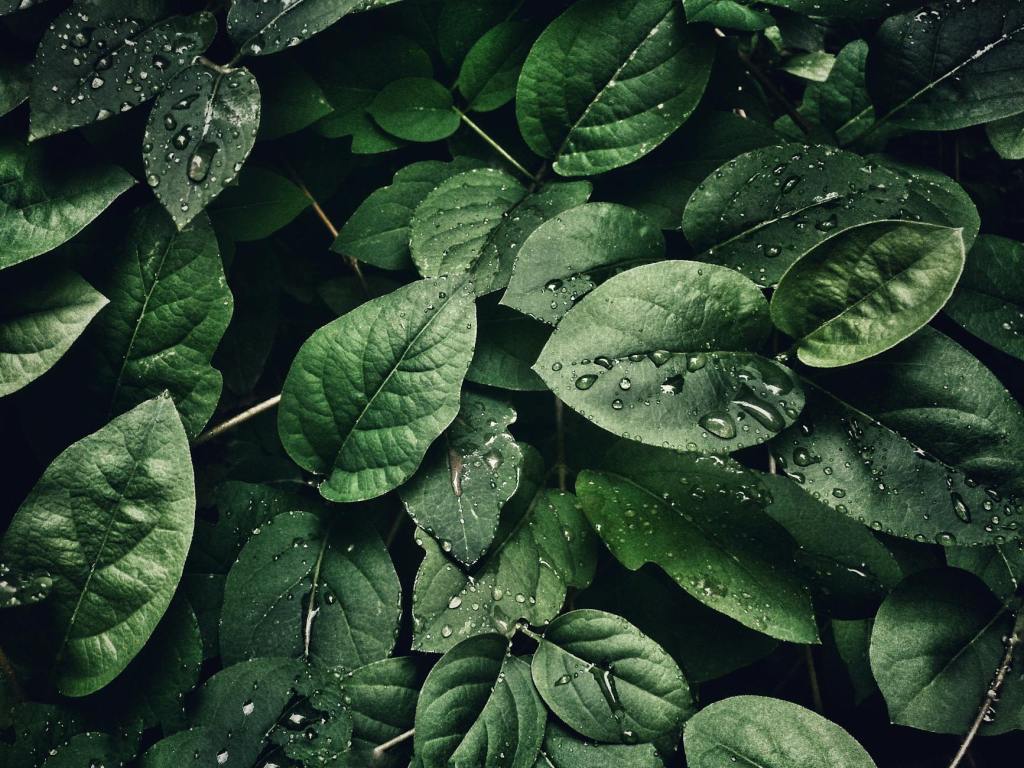
    At its core, photosynthesis occurs in chloroplasts—organelles found in plant cells. These contain a green pigment called chlorophyll, which captures sunlight. Using this energy, plants take in carbon dioxide from the air and water from the soil to produce glucose (a simple sugar) and release oxygen as a byproduct. The general formula is:

    6CO₂ + 6H₂O + light → C₆H₁₂O₆ + 6O₂

    This process happens in two stages. The light-dependent reactions use sunlight to split water molecules, releasing oxygen and generating energy carriers like ATP and NADPH. In the next stage—the Calvin Cycle—these carriers are used to fix carbon dioxide into glucose, which the plant can then use for growth, storage, or immediate energy.

    Photosynthesis is not just important for plants. The oxygen it produces allows animals, including humans, to breathe. The sugars it creates fuel not just the plant but the herbivores that eat them, the carnivores that eat those herbivores, and so on. Essentially, every bite of food you’ve ever eaten began with photosynthesis.

    This process also helps regulate Earth’s climate. Plants absorb massive amounts of carbon dioxide, a greenhouse gas, helping to stabilize atmospheric levels. Forests, wetlands, and oceans all act as carbon sinks because of their high rates of photosynthetic activity.

    There are variations of photosynthesis too. Some plants, like cacti and succulents, use CAM photosynthesis to minimize water loss, fixing carbon at night instead of during the day. Others, like corn and sugarcane, use C4 photosynthesis, which is more efficient in high temperatures and sunlight.

    Understanding photosynthesis has allowed scientists to improve agriculture, study climate change, and explore new technologies like artificial photosynthesis, where solar panels mimic the process to generate clean fuel. If these systems can be scaled up, they might offer a sustainable alternative to fossil fuels.

    Despite its simplicity on the surface, photosynthesis is one of the most complex and finely tuned systems in nature. It runs quietly in the background, transforming sunlight into the energy that powers ecosystems, economies, and life itself.

  • Plants Can Talk—and They’re Smarter Than You Think

    Plants Can Talk—and They’re Smarter Than You Think

    For centuries, plants were treated as passive green scenery—living, yes, but unconscious, unfeeling, and certainly unintelligent. They couldn’t move. They didn’t have brains. Their silence was mistaken for simplicity. But that view is rapidly changing. Recent discoveries in botany, ecology, and biochemistry suggest that plants are far more communicative and aware than we ever imagined. They don’t just respond to the world—they interact with it. And in some cases, they seem to remember, decide, and even warn others.

    If you think plants are dumb, it may be because you’re listening with the wrong senses.

    The Hidden Language of Plants

    Plants don’t use sound waves to communicate, but they do send messages—through air, soil, and even electrical impulses. One of the most striking examples is the way plants use volatile organic compounds (VOCs). When a leaf is chewed by an insect, the plant releases VOCs into the air—chemical signals that warn neighboring plants of the attack. Those nearby plants often respond by boosting their own chemical defenses, producing bitter or toxic compounds to make themselves less appetizing.

    It’s not just about defense. Certain plants send out VOCs to attract specific insects that will kill or drive away their predators. For instance, wild tobacco plants attacked by caterpillars can release scents that summon predatory bugs to feast on the caterpillars. This isn’t random chemistry—it’s a form of targeted messaging.

    Even roots communicate. Underground, trees and other plants exchange nutrients and information via a network of fungi known as mycorrhizal networks, often dubbed the “Wood Wide Web.” These fungi link the roots of multiple species, allowing carbon, nitrogen, phosphorus, and chemical signals to move between them. A tree stressed by drought, for example, may receive carbon from a healthier neighbor through these fungal channels. This system creates what looks eerily like a form of cooperation and community memory.

    Memory Without a Brain

    One of the most shocking revelations in recent years comes from the study of a humble aquatic plant called Mimosa pudica—commonly known as the sensitive plant. When touched, it folds its leaves inward in a rapid, visible response. But researchers at the University of Western Australia discovered something stranger: after repeated harmless touches, Mimosa eventually stops reacting. It appears to learn that the stimulus is not dangerous.

    Even more remarkably, the plant remembers this information for weeks. That’s a key trait of memory. No neurons. No central nervous system. Just cells processing experience and retaining it over time.

    Other studies have shown that plants can adjust their growth depending on learned environmental patterns—tracking light cycles, anticipating shade from competitors, or modifying root structure based on nutrient availability. This behavior isn’t just reflexive. It suggests a form of decision-making based on past outcomes.

    Sound, Vibration, and Possibly Hearing

    Here’s where it gets weirder. There is growing evidence that some plants respond to sound. In lab tests, certain flowers increase nectar production when exposed to the sound of pollinators like bees. Roots have been shown to grow toward the sound of running water, even when no moisture is present in the soil.

    Plants seem to sense vibrations and mechanical waves, even though they have no ears. In 2019, a study published in Cell suggested that roots might detect specific frequencies and change behavior in response. While it’s not “hearing” in a human sense, it points to a kind of awareness that is tuned to the vibrations of life around them.

    There are even hypotheses that some plants may emit ultrasonic sounds during stress, such as drought—tiny “clicks” or pops detectable with sensitive microphones. While not proven to be a form of communication yet, the implications are staggering. Are plants trying to signal distress? Are they “screaming” in a frequency we simply can’t hear?

    Plant Intelligence: A Redefined Concept

    The reluctance to call plants “intelligent” stems from a rigid, human-centric definition of intelligence. But if we define it more broadly—as the ability to sense the environment, process information, adapt behavior, and solve problems—then plants qualify.

    They can analyze their surroundings, determine where to send roots, when to bloom, how to allocate energy, and even whom to support or compete with. Their decision-making is decentralized, happening across distributed networks of cells and tissues, much like a hive or an algorithm. In some ways, it’s a kind of alien intelligence—one that doesn’t rely on neurons, but on biochemistry, electric signaling, and cellular computation.

    Monica Gagliano, a leading researcher in plant behavior, has controversially proposed that plants might even possess a form of consciousness—not in the emotional or narrative sense humans experience, but in terms of internal experience and self-regulation. While this remains speculative and hotly debated, it forces science to ask deeper questions: What is mind? What is awareness? And can life without a brain still “feel” in some primitive form?

    Why This Matters

    This isn’t just a curiosity—it’s a philosophical and ecological revolution. If plants are capable of sophisticated behavior, if they have memory, communication, and problem-solving abilities, then how we treat them—and how we view ourselves—needs to evolve.

    Agriculture, forestry, urban landscaping, and climate policy all depend on an understanding of plant biology. Acknowledging the intelligence of plant life doesn’t mean we stop using plants—but it does challenge the idea that they are mere passive resources. They are active participants in the living systems of Earth.

    It also reframes the way we look at life on other planets. If life doesn’t need a brain to be smart, we might need to reimagine what alien intelligence could look like—not as humanoid engineers, but as towering, slow-moving, photosynthetic organisms rooted in place but rich in chemical communication.

    Conclusion

    Plants are not silent. They’re just speaking a language we’ve only just begun to hear. Their awareness is quiet, their decisions slow, their signals invisible—but none of that makes them unintelligent. It only makes them different.

    And maybe, in a world full of loud human noise, it’s the silent intelligences we need to learn from most.

  • The Tragedy of Light Pollution—and the Lost Beauty of the True Night Sky

    The Tragedy of Light Pollution—and the Lost Beauty of the True Night Sky

    Not long ago, every human on Earth could look up at night and see the stars. Really see them. The Milky Way arched overhead in glowing rivers of light. Shooting stars fell in streaks. Planets shined clearly. The sky wasn’t just black—it was alive.

    Now, for more than 80% of the world’s population—and over 99% of people in developed nations—that sky is gone. Replaced by a pale orange haze. Cities bleed artificial light into the atmosphere, drowning out the stars with a dull, permanent twilight.

    This is light pollution. And it’s more than an aesthetic loss—it’s a tragedy of biology, astronomy, and soul.


    What Is Light Pollution?

    Light pollution is the excessive or misdirected use of artificial light that brightens the night sky and obscures celestial objects. It’s not just about city glow—it’s everything from unshielded streetlights to glowing billboards, floodlit parking lots, and backyard security lights.

    There are several types:

    Skyglow: the diffuse glow over urban areas that blocks starlight
    Glare: harsh, direct lighting that scatters and impairs visibility
    Clutter: chaotic groupings of bright lights that confuse natural vision
    Light trespass: when unwanted light spills into places meant to be dark

    These forms combine to create a dome of light that can stretch for dozens—or even hundreds—of miles beyond city limits.


    The Human Eye Was Built for Darkness

    Our ancestors lived under darkness for millions of years. The human circadian rhythm—the internal biological clock that controls sleep, hormone levels, and metabolism—is synchronized to the rising and setting of the Sun.

    But artificial light, especially blue-rich LED lighting, confuses that rhythm. It suppresses melatonin, delays sleep, and disrupts the body’s ability to rest, heal, and function properly. Sleep disorders, depression, obesity, and even increased cancer risks have all been linked to chronic exposure to light at night.

    We are day-night creatures. And we’ve flipped the world upside down.


    Wildlife and Ecosystems Are Being Thrown Off Course

    Light pollution isn’t just a human issue. Countless species rely on darkness to survive.

    Baby sea turtles hatch on beaches and instinctively crawl toward the brightest horizon—once the moonlit sea. Now, they crawl inland toward hotels and streetlights, where they die of exhaustion or predation.

    Migrating birds crash into lit skyscrapers. Nocturnal insects—especially moths—circle artificial lights until they collapse, disrupting pollination and food chains. Frogs, bats, and fireflies are all declining due to nighttime illumination.

    The rhythm of life on Earth—millions of years in the making—is being distorted by our need to keep the lights on.


    The Sky We’ve Forgotten

    The modern night sky is a lie. In cities, you may see only a handful of the brightest stars—if any. The Milky Way is gone. Most planets are invisible. Even meteor showers lose their luster in the glare.

    But in truly dark places—few and fading—you can still see what we lost.

    The Milky Way stretches like smoke from one horizon to the other, with stars packed so densely they seem painted on. Jupiter shines like a beacon. Mars burns red. Saturn, with a telescope, shows its rings. Nebulae glow in violet clouds. Even the Andromeda galaxy—2.5 million light-years away—can be seen with the naked eye under ideal skies.

    This was once normal. It was ours.

    Now, for most people, it’s a memory they’ve never made.


    A Loss of Wonder

    When you remove the stars, you shrink the imagination.

    For thousands of years, humans looked up and saw patterns—constellations, gods, stories. Navigation, agriculture, philosophy, and timekeeping were all born from watching the night sky. Even our calendar is carved from lunar cycles.

    The night sky inspired Newton to study gravity. Galileo to build telescopes. Einstein to question time. And children everywhere to ask, “What’s out there?”

    Without the stars, something ancient inside us dims. Light pollution isn’t just blotting out the sky. It’s dulling the human need to explore.


    Can We Reverse It?

    Yes—and more easily than you think.

    Unlike climate change or habitat loss, light pollution can be fixed overnight. All it takes is better lighting design. Shielding lights downward. Using warm-toned LEDs instead of blue-white ones. Turning off lights when they’re not needed.

    Some cities are acting. Flagstaff, Arizona became the world’s first “International Dark Sky City.” France now requires shops to turn off lights at night. Global observatories are fighting for stricter regulations to preserve skies for science.

    But it takes awareness. And will. And a reminder that the night is not meant to be conquered—it’s meant to be seen.


    Final Thoughts

    The stars haven’t gone anywhere. They’re still out there, burning silently across billions of light-years. But they’ve been buried under a glow we didn’t question.

    To look up at the true night sky is to remember how small we are—and how beautiful that smallness can be. It reminds us that we are part of something vast, ancient, and unfinished.

    The tragedy of light pollution isn’t just the loss of visibility. It’s the loss of vision.

    But we can reclaim it.

  • Weird Biology: Creatures That Shouldn’t Exist—But Do

    Weird Biology: Creatures That Shouldn’t Exist—But Do

    In a world ruled by rules—gravity, evolution, survival of the fittest—some organisms break them and survive anyway. They’re outliers. Biological rebels. Creatures that by all logic shouldn’t exist… yet they do.

    Nature is full of weirdos, but some lifeforms are so strange they seem like sci-fi leftovers. Immortal, limb-regrowing, radiation-immune, even vacuum-surviving—these species force scientists to rethink what life is actually capable of.

    Here are some of the world’s strangest organisms—and the science that makes them not just real, but impossible to ignore.


    The Immortal Jellyfish (Turritopsis dohrnii)

    Immortality sounds like myth. But there’s a jellyfish that can do it.

    Native to oceans worldwide, Turritopsis dohrnii doesn’t die of old age. Instead, when it’s injured, starving, or aging, it triggers a process called transdifferentiation—turning its adult cells back into juvenile ones. In simple terms, it reverts its age. Again and again. Potentially forever.

    This loop isn’t true immortality—it can still be killed by predators or disease—but biologically, it has no programmed end. Researchers are studying its cellular mechanisms to understand regeneration and aging in humans.


    The Axolotl (Ambystoma mexicanum)

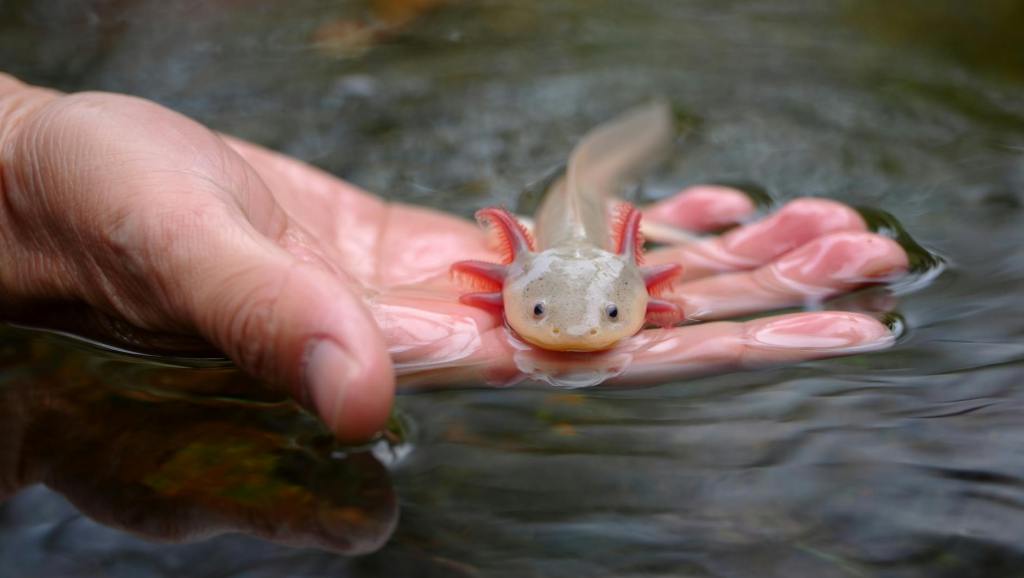
    Known for its permanent smile and frilly head gills, the axolotl is a Mexican amphibian that never really grows up—it stays in its juvenile, aquatic form its whole life, a condition called neoteny.

    But what makes the axolotl truly bizarre is its regeneration. It can fully regrow entire limbs, parts of its brain, spinal cord, heart tissue, and even parts of its eyes—without scar tissue.

    Most animals can’t do this. Even other salamanders have limits. Scientists are using axolotls to study how cells regrow without mutating into cancer, hoping to one day apply that knowledge to human healing.


    The Tardigrade (Water Bear)

    Tardigrades are microscopic, eight-legged creatures that live in water films on moss and soil. They’re nearly indestructible.

    They’ve survived:

    • Extreme heat and cold (from near absolute zero to above boiling)
    • High radiation
    • Intense pressure
    • Complete dehydration for decades
    • Exposure to space and vacuum conditions

    How? Tardigrades enter a state called cryptobiosis, where they dry up, stop metabolic activity, and become almost lifeless—like a paused game. In this state, they’re protected by proteins and sugar molecules that shield their DNA from damage.

    They’re proof that life can survive beyond Earth-like conditions—and possibly on other planets.


    The Platypus (Ornithorhynchus anatinus)

    It lays eggs. It has fur. It produces milk. It has a duck bill. It’s venomous. It’s a mammal. None of that should go together.

    When British scientists first examined a platypus in the 1800s, they thought it was a fake—a stitched-together prank. But it wasn’t. The platypus is one of only five surviving species of monotremes, mammals that lay eggs.

    Males also have venomous spurs on their hind legs, delivering a painful chemical cocktail. And their bill? It’s not just for looks. It’s loaded with electroreceptors that detect tiny signals from prey in muddy water.

    The platypus breaks every rule in the mammal playbook—and reminds us that evolution doesn’t care about fitting in.


    The Glass Frog (Hyalinobatrachium fleischmanni)

    Native to Central and South America, the glass frog has see-through skin on its underside. You can literally see its beating heart, organs, and digestive system.

    While the transparency might seem like camouflage, scientists believe it’s also useful for thermal regulation and reducing shadows that predators might notice.

    Recent studies found that glass frogs have the ability to hide their red blood cells in their liver while they sleep, reducing visibility through their skin and avoiding detection by predators. That’s an unheard-of biological strategy in vertebrates.


    The Green-Blooded Lizard (Prasinohaema)

    Found in New Guinea, this bright green lizard isn’t colored by skin pigment—it has green blood.

    Its blood contains extremely high levels of biliverdin, a toxic byproduct of red blood cell breakdown. In most animals, even small amounts of biliverdin cause jaundice and liver damage. But for this lizard, it’s totally normal.

    Scientists are baffled by how it avoids poisoning itself. Some believe the high biliverdin concentration may help protect against parasites or infections, acting as a kind of internal defense.

    It’s a biological contradiction—and a mystery still being unraveled.


    The Naked Mole-Rat (Heterocephalus glaber)

    It’s blind, wrinkled, nearly hairless, and lives underground. But don’t underestimate it.

    Naked mole-rats resist cancer, feel almost no pain, and can survive in low-oxygen environments that would kill humans in minutes. They also live ten times longer than other rodents their size, with little age-related decline.

    Their cells are weird. Their DNA repair systems are unusually efficient. Their brains can switch to fructose metabolism when oxygen runs low, something only plants typically do.

    They’re a biomedical goldmine—and a glimpse into what extreme survival really looks like.


    Final Thoughts

    We often assume evolution follows a neat, logical path. But nature is experimental. Life isn’t a checklist—it’s a playground. These creatures didn’t just adapt. They rewrote the rules.

    From regenerating limbs to surviving in space, these organisms challenge our assumptions about biology, aging, and survival. They’re not just bizarre animals—they’re reminders that life is far stranger, more flexible, and more creative than we give it credit for.

    And if Earth can produce life this weird, imagine what’s possible beyond it.

  • The Earth Without Humans: How Fast Would Nature Reclaim the Planet?

    The Earth Without Humans: How Fast Would Nature Reclaim the Planet?

    Imagine if, tomorrow, every human vanished. No war. No collapse. Just quiet. Planes fall from the sky. Lights go dark. Cities freeze in time. What happens next isn’t chaos—it’s rebirth. Nature, long subdued, begins its silent takeover.

    But how fast would Earth erase us?

    This isn’t just sci-fi. It’s a scientifically grounded thought experiment. From abandoned buildings overtaken by vines to animals reclaiming ancient migratory paths, researchers, ecologists, and urban decay specialists have pieced together a clear timeline. It turns out: Earth doesn’t need us. And it wouldn’t take long to forget us either.


    The First 24 Hours: Power Fails, Silence Falls

    Within hours of human disappearance, most power plants would shut down. Without staff to manage them, fossil-fueled stations stop. Solar and wind might last longer, but they’d eventually degrade. Nuclear plants would trigger automatic safety shutdowns, but their cooling systems would eventually fail—creating pockets of radiation unless designed for passive safety.

    Lights go dark. Cities fall into silence. Subways flood. Pumps keeping tunnels dry stop working, allowing groundwater to rise.

    Animals, sensing a shift, emerge. Rats, foxes, and birds roam streets with no cars. Domesticated pets—especially dependent breeds—struggle to survive. Some starve. Others adapt fast.


    Weeks to Months: Roads Crack, Wildlife Expands

    Plants begin reclaiming edges of infrastructure. Seeds buried in sidewalk cracks take root, nourished by uncut grass and uninterrupted rain. Insects explode in population without chemical pest control. Weeds dominate parks, gardens, and rooftops.

    Without street maintenance, asphalt heats and cracks. In warmer climates, vines climb traffic lights and balconies. In colder zones, freeze-thaw cycles split pavement apart. Birds nest in gutters. Squirrels take over attics. Coyotes, boars, and deer begin moving into urban cores.

    Cattle and sheep in fenced farms either break out—or fall prey to predators. Nature’s filter begins: adaptable species rise; fragile ones fall.


    1–5 Years: Cities Deteriorate, Forests Push In

    Within one to five years, nature’s grip is obvious. Roots pry open roads. Ivy overtakes buildings. Glass shatters in storms. Roofs collapse under unremoved snow. Without climate control, mold flourishes indoors. Walls dampen. Structures rot.

    In cities like New York, trees sprout in Central Park and radiate outward. In Los Angeles, chaparral returns. In Europe, wolves roam suburbs again. Elephants might thrive across abandoned towns in India and parts of Africa—no longer confined or killed.

    Vehicles rust and degrade. Tires disintegrate. Gasoline evaporates. Birds nest in car frames. Without human-made noise, songbirds shift their vocal ranges back to natural frequencies.


    10–50 Years: Metal Rots, Skyscrapers Collapse

    Metals corrode quickly without upkeep. Bridges collapse. Exposed steel in skyscrapers weakens. Some towers fall from storm damage or foundational erosion. Those built with stone or concrete last longer—but cracks and plant growth accelerate their demise.

    Dams fail. Rivers flood old valleys. Beavers and fish retake waterways, restoring natural flows altered by centuries of human interference. Coral reefs damaged by tourism and pollution may begin slow recovery. With less carbon input, oceans start to stabilize.

    Abandoned suburbs return to forest. Coyotes, lynx, wildcats, and bears make dens in what were once driveways.


    100–1,000 Years: Nature Dominates, Cities Are Bones

    In 100 years, most wooden structures are gone. Concrete shells remain, but are heavily broken down. Forests grow thick through neighborhoods. Tree canopies block former streets. Entire towns disappear under soil and moss. Nature builds layers over memory.

    Wild megafauna—bison, wolves, even reintroduced species—thrive in open space. Genetic diversity recovers in species once hunted to the brink. With no hunting, predator-prey dynamics shift toward natural balances. Former national parks blend into continuous wildland.

    Monuments like Mount Rushmore may still be visible in 7,000 years. But most human structures—especially made of glass, plastic, or steel—erode or crumble.


    10,000+ Years: Traces Fade, But Not All

    Eventually, even our deepest buildings fall to sediment and time. Forests, deserts, and wetlands reclaim every inch. But some things remain. Bronze statues. Ceramics. Plastic buried in landfills. Radioactive isotopes. Underground metro tunnels fossilized into rock. And perhaps the occasional human skeleton encased in a sealed tomb.

    If a new intelligent species evolved or visited, they might discover traces: ruins under jungle canopies, peculiar stratification in the fossil record, even our chemical signatures embedded in ice cores or sediment layers.

    But to the Earth itself, we were a flash. A chapter closed.


    Why This Matters

    We often speak of “saving the planet.” But Earth doesn’t need saving—it needs time. Humans are not the masters of Earth. We are tenants with fragile blueprints.

    This isn’t a story of doom. It’s a story of perspective. Life wants to grow. The moment we let go—even involuntarily—it begins again. Trees break walls. Flowers bloom in highways. Owls return to towers. The planet remembers how to breathe without us.

    So maybe the better question isn’t how long would it take for Earth to reclaim itself?
    Maybe it’s how long will we keep pretending we’re in control?